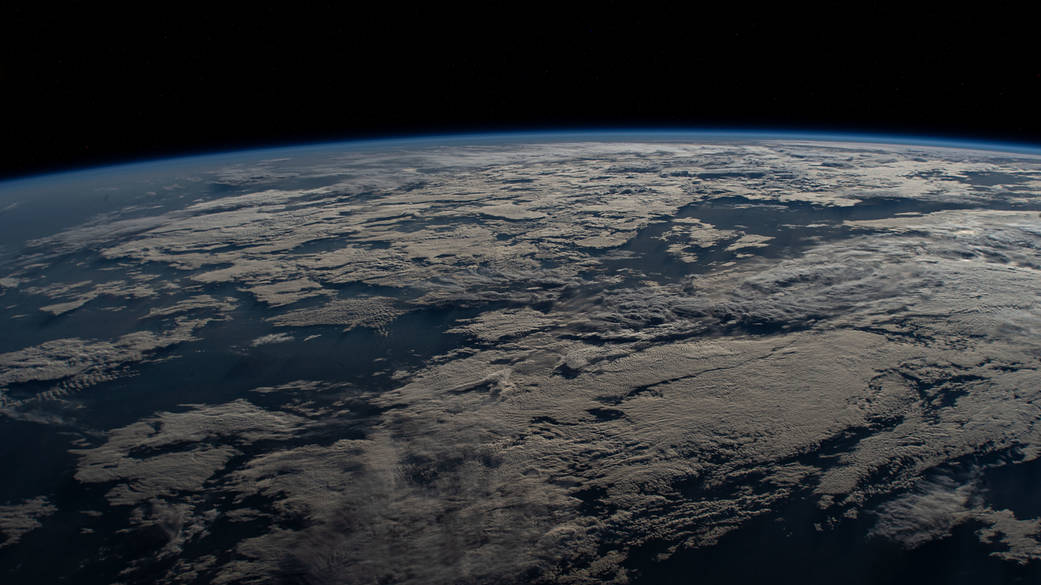
Earth's limb photographed from the International Space Station
Genes in Space 2026 finalist. Top 5 of 980 submissions.

Watch the experiment before it flies.

Flight Lab is a browser walkthrough of the Capsule Space Labs flight protocol in 3D. Step through the lipid nanoparticle (LNP) cutaway, the tube chemistry, the launch, the storage window aboard the International Space Station (ISS), and the readout, with the reasoning for each step written beside it.

26 steps, start to finish Runs in the browser, nothing to install Every step matches the written flight protocol
I / Simulations

One protocol, one question

Does the package hold?

The Flagship Experiment measures whether messenger RNA (mRNA) leaks out of its lipid nanoparticle during spaceflight, using a sealed tube assay a crew member can run by hand in about an hour.

Step 1 of the research program 26 steps
Detection assay

Flagship Experiment

Pre-frozen mRNA-LNP tubes fly to the ISS, thaw on station, and run a BioBits cell-free reaction. Leaked messenger RNA unlocks a green fluorescent protein (GFP) switch, so how brightly a tube glows tells you how much cargo escaped.

Tubes
16 per rack
Formulations
Standard and high PEG
Cold chain
Frozen at -80 C
Readout
P51 fluorescence viewer
01

Anatomy and failure mode

What sits inside an 80 nanometer LNP, how microgravity loosens the lipid membrane, and the tube chemistry that turns a leak into visible light.

Steps 01 to 06
02

Rack layout

Standard PEG tubes, high PEG tubes, detergent controls, and calibration blanks assembled into a 16-tube rack with an identical Earth twin.

Steps 07 to 10
03

Freeze and fly

Flash freeze, insulated cold-chain packing, launch vibration on a crew resupply flight, and transfer into the ISS science module.

Steps 11 to 14
04

Storage and readout

Sustained microgravity storage, a simultaneous thaw on station and on Earth, and a handheld fluorescence read through a 585 nanometer filter.

Steps 15 to 18
05

Encapsulation efficiency

The efficiency calculation, the flight versus ground comparison, the control tubes that validate it, and what each outcome would mean.

Steps 19 to 26
Ends with the encapsulation efficiency formula and the paired flight comparison. Launch simulation
II / Research Progression

Where this fits

Detection first, then potency, then the fix.

Each stage only makes sense once the one before it has an answer. The walkthrough in Flight Lab covers the first stage in full.

01

Detection

Measure how much messenger RNA escapes its lipid nanoparticle after a real flight, using a tube assay a crew member can run by hand.

In this walkthrough
02

Potency

Test whether that measured leak actually costs a vaccine its protective effect.

03

Tuning

Adjust the PEG-lipid ratio and storage conditions until the package holds under the same conditions that broke it.

04

Qualification

Give every dose a stability record, so a medicine carries a flight-readiness number rather than an Earth shelf-life label.

05

Deployment

A crew medical kit that still works after months of transit, with no resupply and no hospital behind it.

III / Reading The 3D View

Before you start

Everything on screen has a name.

The walkthrough uses one color language and one set of controls. The notes panel carries the full component list for each step, so the 3D view itself stays readable rather than covered in labels.

Color key

  • Pink bristles. PEG-lipid, the outer stability shield.
  • Blue strands. Messenger RNA cargo, either the trigger or the antigen.
  • Green glow. Green fluorescent protein, the visible leak signal.
  • Gold cube. The locked BioBits switch that leaked RNA unlocks.
  • Teal shell. The high PEG formulation being tested against the standard.
  • Cream liquid. BioBits cell-free mix, the reaction the tube runs.

Controls

  • Next stepAdvances one step and re-stages the 3D scene around it.
  • Jump to stepOpens the full step list so you can go straight to a stage.
  • NotesOpens the side panel: summary, component list, and the color key.
  • DragOrbits the camera. Scroll to zoom in on the model.

Every number in these walkthroughs is a stated hypothesis, not a measured result. Nothing here has flown yet. The point of the simulation is to show exactly what would be measured, and how the measurement would be checked.

The International Space Station Canadarm2 and solar array above Earth

Why build it in 3D

A protocol you can see is a protocol you can argue with.

Written protocols hide their weak points. Putting every tube, control, and instrument in space, at the right size and in the right order, makes it obvious where a study would fail before anything is committed to a flight manifest.

Each step names its own controls, so nothing rests on an unstated assumption. The ground twin is shown alongside the flight sample at every stage. Hardware is modelled on the ISS-validated viewer described in PLOS ONE, 2024.

Keep going

Start with detection.